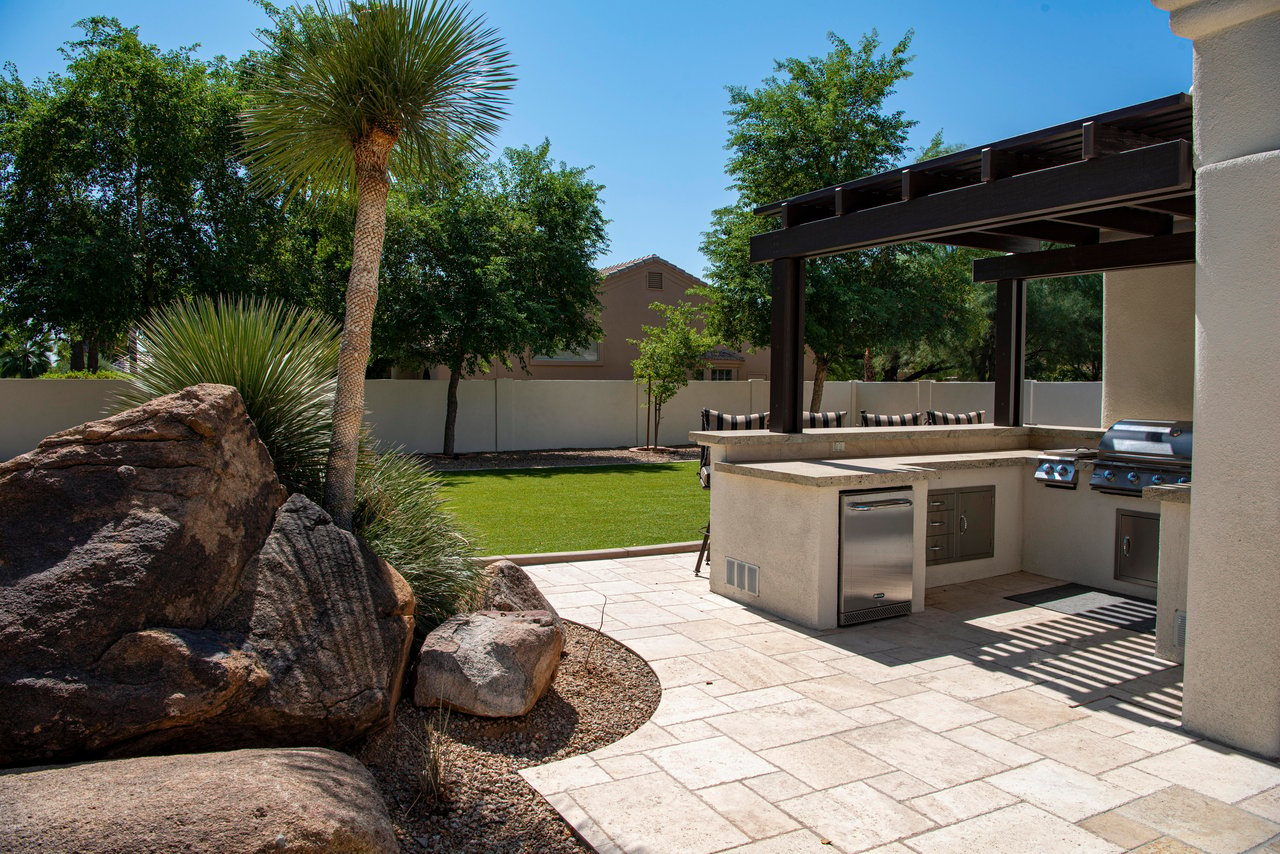
How Mortgage Rates Affect Luxury Homebuying in Scottsdale
Scottsdale Luxury Home Financing: What Buyers Should Know
For luxury buyers, financing decisions often involve more than simply qualifying for a mortgage. They may need to compare jumbo loan options, determine how much liquidity to preserve, evaluate different down payment strategies, and consider how financing terms affect their long-term financial plans.
Some buyers may assume that higher mortgage rates automatically make purchasing a luxury property less attractive. Others may delay their search while waiting for rates to decline. However, interest rates are only one part of the equation. Property pricing, inventory, negotiating opportunities, personal finances, and long-term ownership goals also influence whether a purchase makes sense.
Understanding how mortgage rates affect luxury homebuying in Scottsdale can help buyers make informed decisions, evaluate their options, and approach the market with a more effective strategy.
Why Mortgage Rates Matter in Scottsdale's Luxury Real Estate Market
Scottsdale's luxury real estate market includes a wide range of properties, from sophisticated residences in established neighborhoods to expansive estates in exclusive communities. Because purchase prices can be substantial, financing costs deserve careful consideration.
Mortgage rates determine the interest charged on borrowed money. When rates increase, the cost of financing generally rises. When rates decrease, borrowers may have an opportunity to secure a lower payment, assuming other loan terms remain similar.
For a luxury buyer financing several hundred thousand dollars or more, even a modest rate difference can affect the total cost of ownership.
Consider a buyer purchasing a $2 million property with a 20% down payment. The buyer would finance approximately $1.6 million before accounting for closing costs or other adjustments. A change in the mortgage rate could significantly influence the monthly principal and interest payment.
This is why buyers should evaluate financing early rather than waiting until they have selected a property.
Understanding the relationship between interest rates, loan amounts, and monthly payments helps establish a realistic budget and makes it easier to compare homes with different asking prices.
1. Higher Mortgage Rates Can Reduce Purchasing Power
One of the most direct ways mortgage rates affect luxury buyers is through purchasing power.
Purchasing power refers to the amount a buyer can comfortably afford based on income, existing debt, available assets, down payment, and financing terms.
When mortgage rates rise, monthly payments generally increase for the same loan amount. Depending on a buyer's financial profile and lender requirements, this may reduce the amount they can borrow while staying within their preferred payment range.
For example, consider two buyers looking at properties in Scottsdale's luxury market. Both have similar incomes and financial obligations, but one begins the search when mortgage rates are lower, while the other applies when rates have increased.
Even if both buyers qualify for financing, the second buyer may need to adjust expectations.
That could mean:
Considering a lower purchase price.
Increasing the down payment.
Exploring different financing structures.
Choosing a property with lower ongoing ownership expenses.
Reassessing the preferred monthly payment.
Preserving additional cash reserves for future expenses.
The important distinction is that a buyer's maximum loan approval is not necessarily the same as their comfortable purchasing budget.
Luxury buyers should consider how a mortgage payment fits into their broader financial picture, including investments, business obligations, retirement planning, and other property holdings.
2. Small Rate Changes Can Create Significant Payment Differences
Mortgage rates are often discussed in small percentage-point movements, but the financial impact can become substantial when applied to a large loan balance.
To understand this, consider an illustrative example involving a $1.5 million mortgage with a 30-year fixed-rate term.
The following figures estimate principal and interest payments only. They do not include property taxes, homeowners insurance, HOA fees, or other ownership expenses.
At a 5.5% interest rate, the monthly payment would be approximately $8,516.
At a 6.0% interest rate, the monthly payment would be approximately $8,993.
At a 6.5% interest rate, the monthly payment would be approximately $9,480.
At a 7.0% interest rate, the monthly payment would be approximately $9,979.
These examples demonstrate how a difference of just one percentage point can add more than $1,400 to the estimated monthly principal and interest payment.
For a buyer financing a luxury property, that difference may influence the type of home they pursue, the amount they choose to borrow, or the amount of cash they want to retain after closing.
It is also important to remember that mortgage rates are not the only variable. Loan structure, points, lender fees, credit qualifications, and the timing of a rate lock can affect the final financing terms.
A personalized loan estimate is more useful than relying on general rate averages when evaluating a specific purchase.
3. Jumbo Loans Can Play a Major Role in Luxury Home Financing
Many luxury properties in Scottsdale require financing beyond the conforming loan limits established for conventional mortgages.
These loans are commonly known as jumbo mortgages.
A jumbo loan is a mortgage that exceeds the applicable conforming loan limit for the property location and year. Because the loan amount is larger, qualification requirements and underwriting considerations may differ from those of standard conforming mortgages.
Depending on the lender and loan program, jumbo financing may involve:
Higher credit score expectations.
Larger down payment requirements.
Additional cash reserve requirements.
Detailed income and asset documentation.
More extensive financial review.
Different interest rates and loan structures.
Not every luxury buyer needs a jumbo loan. The applicable loan limit, down payment, property price, and financing arrangement determine whether a mortgage falls into this category.
For buyers considering higher-value Scottsdale homes, exploring jumbo financing early can help clarify the available options.
It is also worth comparing multiple lenders. Their rates, underwriting standards, reserve requirements, fees, and available loan products may differ.
A buyer should evaluate the complete loan structure rather than choosing a lender based solely on the advertised interest rate.
4. A Larger Down Payment Can Change the Financing Equation
One strategy luxury buyers may consider is increasing their down payment.
A larger down payment reduces the amount borrowed, which can lower the monthly mortgage payment and potentially improve the overall financing profile.
For example, consider a $2 million Scottsdale home.
With a 20% down payment, the buyer would contribute $400,000 and finance $1.6 million.
With a 30% down payment, the buyer would contribute $600,000 and finance $1.4 million.
The second option reduces the loan balance by $200,000, which can make a meaningful difference in the monthly payment and total interest paid over time.
However, putting more money toward the property is not automatically the best financial decision.
Luxury buyers may have other priorities for their capital, including investment portfolios, business interests, retirement accounts, or maintaining liquidity for unexpected expenses.
The decision should involve comparing the potential savings from borrowing less against the opportunity cost of using additional cash for the purchase.
Buyers should also consider whether a larger down payment changes their loan eligibility, pricing, mortgage insurance requirements where applicable, or available loan programs.
The best approach depends on individual financial circumstances and long-term objectives.
5. Waiting for Lower Rates Is Not Always the Best Strategy
Some buyers delay purchasing a home because they expect mortgage rates to decline.
While waiting may create an opportunity to secure a lower rate in the future, it also introduces uncertainty.
Mortgage rates are influenced by several economic factors, including inflation, employment conditions, bond market movements, and Federal Reserve policy expectations. They can change in response to economic developments, and future movements are difficult to predict with certainty.
There is also another consideration: home prices and competition may change while buyers wait.
If rates decline, more buyers could enter the market or resume their searches. Increased demand may create additional competition for desirable properties.
In certain circumstances, a buyer who waits for a lower rate could encounter higher asking prices or fewer opportunities in a preferred neighborhood.
This does not mean buyers should rush into a purchase. It means the decision should consider more than the possibility of future interest rate changes.
A better approach is to evaluate whether the current purchase makes financial sense.
Questions worth considering include:
Is the property appropriately priced?
Does the monthly payment fit the buyer's financial plan?
Is the home suitable for the intended ownership period?
Does the property meet the buyer's lifestyle requirements?
Are there financing options that make the purchase more manageable?
Would waiting create a meaningful improvement in the buyer's overall position?
For buyers who are financially prepared and have found the right property, today's financing terms may still support a reasonable purchase.
6. Negotiation Opportunities Can Help Offset Financing Costs
Mortgage rates influence the cost of borrowing, but the purchase price and contract terms also matter.
In Scottsdale's luxury market, buyers should pay attention to how individual properties are positioned relative to comparable homes.
A property that has been listed for an extended period, experienced price reductions, or received limited interest may present an opportunity for negotiation.
Depending on the seller's circumstances and the transaction, buyers may be able to discuss:
A lower purchase price.
Seller contributions toward eligible closing costs.
Interest rate buydown arrangements, where permitted by the loan program.
Repairs or credits following the inspection.
Flexible closing dates.
Other contract terms that improve the overall transaction.
A mortgage rate buydown is one option worth understanding. In certain transactions, funds contributed by the buyer, seller, or another permitted party may reduce the interest rate for a specified period or, depending on the structure, for the life of the loan.
However, buyers should compare the upfront cost of a buydown with the projected payment savings. A lower initial payment does not automatically mean the arrangement provides the best long-term value.
Any seller contribution or financing incentive must also comply with lender guidelines and applicable loan limits.
The goal is to evaluate the complete transaction rather than focusing on a single number.
7. Luxury Buyers Should Look Beyond the Mortgage Payment
A luxury home purchase involves several expenses beyond principal and interest.
In Scottsdale, ownership costs can vary significantly depending on the property's size, location, age, features, and community requirements.
Buyers should account for expenses such as:
Property Taxes
Property taxes should be reviewed for the specific property. Buyers should not assume that a previous owner's tax bill will remain unchanged after a purchase.
Homeowners Insurance
Insurance premiums and coverage requirements can vary based on the home's age, construction, location, replacement cost, and other underwriting considerations.
HOA Fees and Community Expenses
Some Scottsdale neighborhoods and luxury communities have homeowners association fees. These may cover certain shared amenities, landscaping, maintenance, or community services.
Pool and Landscaping Maintenance
Properties with pools, extensive landscaping, outdoor kitchens, and other exterior features may require regular professional maintenance.
Repairs and Capital Improvements
A larger property may involve more complex systems and higher maintenance expenses. Roof replacements, HVAC servicing, plumbing repairs, and upgrades should be considered when planning long-term ownership costs.
Utilities and Property Management
For buyers purchasing a second home, expenses may also include security, property monitoring, utility services, and management while the residence is unoccupied.
These costs should be included in the affordability calculation before making an offer.
A buyer who can comfortably manage the mortgage payment but overlooks ongoing expenses may find the property more costly than expected.
8. The Right Financing Strategy Depends on the Buyer's Goals
There is no single mortgage strategy that works for every luxury buyer.
Some purchasers prioritize lower monthly payments, while others want to preserve liquidity or pay down their mortgage more aggressively.
A buyer purchasing a primary residence may have different priorities from someone acquiring a seasonal property or a long-term investment.
The financing strategy should reflect the intended use of the home, the buyer's financial position, and the expected ownership period.
For example:
Buyers Purchasing a Primary Residence
These buyers may prioritize payment stability, long-term affordability, and a financing structure that supports their household's financial plans.
Second-Home Buyers
Seasonal purchasers may need to evaluate second-home loan requirements, occupancy rules, reserve expectations, and the additional expenses of maintaining a property from a distance.
Luxury Buyers With Significant Assets
Buyers with substantial investments may compare a larger down payment against retaining capital for other opportunities. The decision should account for liquidity, investment risk, and borrowing costs.
Buyers Planning to Sell Another Property
Purchasers coordinating the sale of an existing home may need to evaluate bridge financing, contingent offers, cash reserves, and the timing of both transactions.
A thoughtful financing strategy should consider the entire financial picture, not simply the interest rate available on the day an offer is submitted.
How Scottsdale Luxury Buyers Can Prepare Before Making an Offer
The most effective way to navigate mortgage rate uncertainty is to prepare before entering negotiations.
Luxury buyers should understand their financing options, establish a realistic budget, and evaluate properties based on both immediate affordability and long-term value.
A practical preparation process includes:
Review your financial position: Understand your income, assets, existing obligations, and available down payment.
Compare lenders: Request loan estimates and review interest rates, fees, underwriting requirements, and loan structures.
Explore financing options: Determine whether a conforming mortgage, jumbo loan, or another appropriate program fits the purchase.
Calculate total ownership costs: Include taxes, insurance, HOA fees, maintenance, and utilities.
Get preapproved: Obtain a clear understanding of your borrowing capacity before submitting an offer.
Evaluate comparable properties: Review recent sales and competing listings to determine whether the asking price is supported by the market.
Understand your negotiation position: Consider the seller's circumstances, property history, and available alternatives.
Plan for the long term: Make sure the property and financing structure align with your expected ownership period and financial goals.
Preparation can help buyers respond more confidently when a suitable property becomes available.
The Bottom Line: Mortgage Rates Matter, but Strategy Matters More
Mortgage rates can influence purchasing power, monthly payments, and the overall cost of buying a luxury home in Scottsdale. However, they should not be the only factor guiding a real estate decision.
The right property, appropriate pricing, financing structure, and long-term ownership plan all contribute to a successful purchase.
For some buyers, a higher-rate environment may require a different down payment or loan strategy. For others, it may create opportunities to negotiate on properties that align with their needs.
The most important step is understanding how the numbers work together before making a commitment.
Luxury buyers who approach the Scottsdale market with a clear financial plan and a strong understanding of local property values are better positioned to make decisions that support both their lifestyle and financial objectives.
Buying a luxury home in Scottsdale involves more than choosing the right property. Understanding mortgage rates, financing options, neighborhood values, and the full cost of ownership can make a significant difference in the purchasing process.
Whether considering a primary residence, a second home, or a high-value investment property, having knowledgeable guidance can help bring the different pieces of the transaction together.
Connect with Scottsdale Real Estate Agent Denise McManus to explore Scottsdale's luxury real estate market, evaluate available opportunities, and approach your next purchase with a strategy that reflects your financial and lifestyle goals.
Q&A:
Q: How do mortgage rates affect luxury home prices in Scottsdale?
A: Mortgage rates can influence buyer purchasing power and demand. When borrowing becomes more expensive, some buyers may adjust their budgets, which can affect activity and pricing in certain segments of the market. However, property values also depend on location, inventory, condition, and buyer demand.
Q: Do luxury homebuyers in Scottsdale need jumbo loans?
A: Not necessarily. A jumbo loan is generally required when the mortgage amount exceeds the applicable conforming loan limit. The property's purchase price, down payment, and loan amount determine whether jumbo financing is necessary.
Q: Is it better to buy a luxury home when mortgage rates are low?
A: Lower rates can reduce borrowing costs, but they do not automatically make every property a good purchase. Buyers should also consider pricing, inventory, competition, and their long-term
financial position.
Q: Can a larger down payment help reduce mortgage costs?
A: Yes. A larger down payment reduces the amount borrowed, which generally lowers the monthly principal and interest payment. However, buyers should compare potential mortgage savings with the value of keeping additional cash available for investments, reserves, and other financial priorities.
Q: What is a mortgage rate buydown?
A: A mortgage rate buydown is an arrangement in which eligible funds are used to reduce the borrower's interest rate. Depending on the structure, the reduction may apply temporarily or for the life of the loan. Buyers should compare the upfront cost with the expected payment savings.
Q: What other costs should luxury homebuyers consider besides their mortgage?
A: Buyers should account for property taxes, homeowners insurance, HOA fees, utilities, pool maintenance, landscaping, repairs, and other ongoing ownership expenses. These costs can vary considerably depending on the property.
Q: Should I wait for mortgage rates to decrease before buying in Scottsdale?
A: Waiting may provide an opportunity to obtain a lower rate, but future rate movements are uncertain. Property prices, inventory, and competition can also change. Buyers should evaluate whether a purchase is financially comfortable under current conditions rather than relying entirely on a rate forecast.