If you are shopping in Arcadia, the house is only part of the story. In this neighborhood, lot value often drives long-term upside because the land may shape what you can remodel, expand, or eventually rebuild. If you want to make a smart decision now and protect future options later, it helps to understand how Arcadia’s lots, rules, and design context work together. Let’s dive in.
Why lot value matters in Arcadia
Arcadia has long carried a land-driven premium. According to the City of Phoenix historic survey, the area developed around large estate lots and citrus cultivation, with early parcels often divided into five- to ten-acre tracts. That history still matters today because buyers often pay not just for the existing home, but for what the site may support over time.
In practical terms, lot value in Arcadia is about optionality. A parcel may offer room for a thoughtful renovation, a larger addition, or a future rebuild, but only if the site and local rules support that vision. That is why two homes with similar square footage can have very different appeal based on lot layout, orientation, frontage, and flexibility.
Arcadia boundaries can affect your plan
One of the first things to know is that Arcadia is not governed by one simple city boundary. The Phoenix historic survey notes that the original Arcadia plat stretched across parts of both Phoenix and Scottsdale, and current neighborhood definitions can vary depending on the source.
For you as a buyer or owner, that means the exact property location matters. Before you assume what is possible, confirm whether the home falls under Phoenix or Scottsdale jurisdiction, and then review the rules that apply to that specific pocket.
What creates lot value today
Lot value is not just about size. In Arcadia, the most important question is whether the parcel can support the version of the property you may want in the future while still fitting the site and surrounding streetscape.
A strong lot often gives you flexibility without forcing design compromises. That can include room for an addition, a workable building envelope, and enough depth or width to improve the home without overwhelming the parcel.
Key lot features to study
When you evaluate an Arcadia property, focus on these site fundamentals:
- Parcel width and depth
- Frontage and access
- Setbacks and usable building area
- Drainage and topography
- Sun exposure and shade opportunities
- Privacy and orientation
- How the home sits within the streetscape
Scottsdale’s Sensitive Design Program offers a helpful lens here. Its guidance emphasizes context, siting, orientation, shade, outdoor living, and continuity along the street. Even if a home is in a different jurisdiction, those ideas are useful for judging how well a lot may support a future project.
Orientation and topography are not minor details
In Arcadia, land conditions have always influenced how properties function. The Phoenix historic survey notes that the slope of the land affected irrigation patterns historically, especially in relation to canal water south of Camelback Road.
That history matters because orientation and grade still shape usability today. A lot’s slope, sun exposure, and relationship to outdoor living areas can influence everything from patio comfort to the placement of additions and the feel of the backyard.
Questions to ask about the site
Before you fall in love with finishes, ask practical questions about the land itself:
- Where does the strongest afternoon sun hit?
- Is there enough room for shaded outdoor living?
- Will drainage limit future improvements?
- Does the lot shape create awkward design constraints?
- Can a future addition fit naturally on the parcel?
These questions may seem simple, but they can reveal whether a property offers true flexibility or only the appearance of it.
Remodel, expand, or rebuild?
In Arcadia, that decision often comes down to both design and regulation. A house may seem like an ideal candidate for expansion, but neighborhood planning goals, historic review, and permit pathways can change the picture.
Phoenix’s Arcadia Camelback Special Planning District is intended to sustain residential character in a mature, low-density neighborhood near Camelback Mountain. That means the best project is not always the biggest project. A plan that respects neighborhood scale and stability may have a clearer path and stronger long-term value.
On the Scottsdale side, the process can differ. Scottsdale’s Southern Scottsdale Character Area Plan focuses on preserving neighborhood character, and the city notes that some projects move directly into permit review while others may require more formal review, outreach, or hearings depending on scope.
How to think about each path
Here is a simple way to frame your options:
| Path | Best fit | Main consideration |
|---|---|---|
| Remodel | You like the existing footprint and character | Focus on function, flow, systems, and design fit |
| Expand | You need more space but want to keep much of the home | Check setbacks, scale, and how the addition fits the lot |
| Rebuild | The site is the main value driver | Review jurisdiction, process, and neighborhood context carefully |
For many buyers, the right answer is the path that balances lifestyle now with flexibility later.
Historic status can change your remodel strategy
Historic status is a major factor in some parts of Arcadia. Phoenix states that properties on the Historic Property Register are subject to review for demolition and certain exterior changes, and that visible exterior work may require a specific approval process.
Routine maintenance is treated differently from major changes, but larger additions, new garages, and highly visible exterior modifications can face more review. Phoenix also evaluates historic integrity based on factors such as location, design, setting, materials, workmanship, feeling, and association.
If you are considering a property with historic status or in a historic overlay area, your remodel strategy should start there. What looks simple on paper may become more complex once exterior visibility and preservation standards enter the discussion.
The best remodels respect Arcadia’s architecture
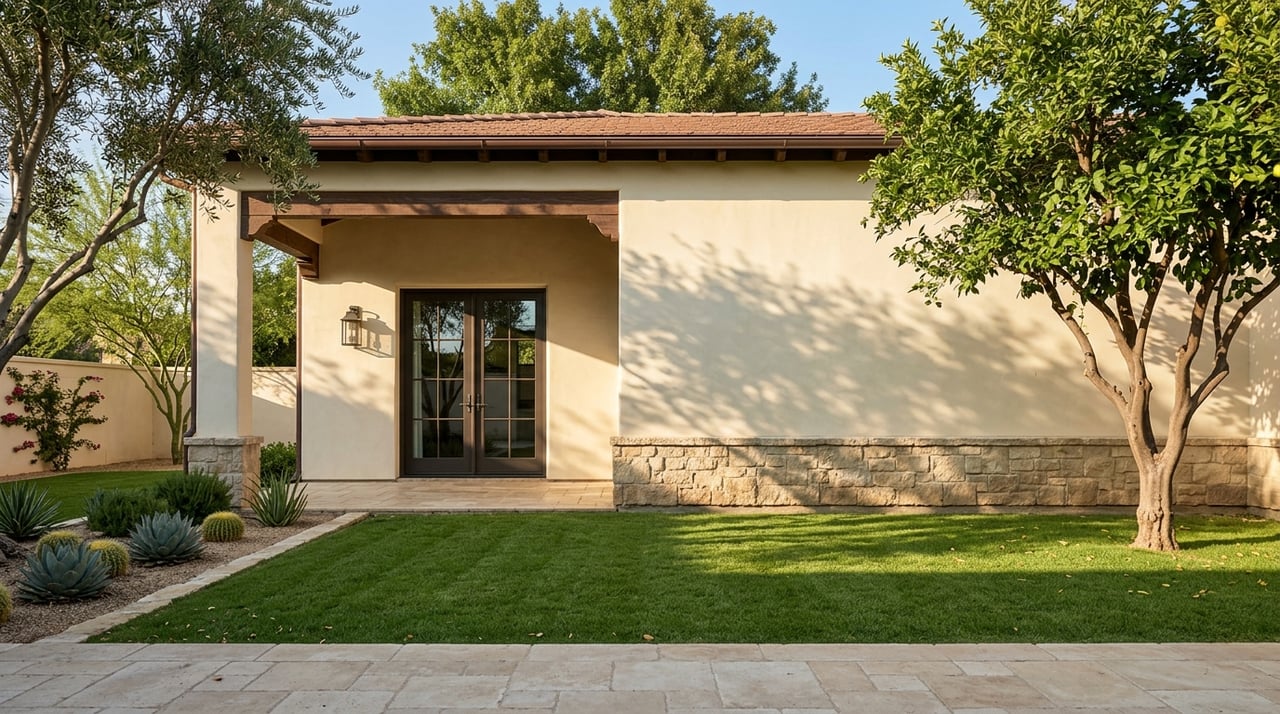
Arcadia’s older homes often reflect Spanish Colonial Revival, Monterey Revival, and Pueblo Revival influences, according to the Phoenix historic survey. Common traits include stucco walls, clay tile roofs, courtyards, recessed porches, and long horizontal massing.
That does not mean a home must stay frozen in time. It means the most successful updates usually improve livability while working with the home’s original proportions and the lot’s natural strengths.
Smart remodel priorities in Arcadia
A well-planned Arcadia remodel often focuses on:
- Better indoor-outdoor flow
- More effective shade and overhangs
- Improved patios and yard use
- Refreshed windows and rooflines
- Water-efficient, desert-aware landscape planning
- Updated systems that make an older home easier to live in
Scottsdale’s design guidance supports many of these ideas through its emphasis on shade, recessed windows, outdoor rooms, and desert-adapted site design. In other words, the goal is often not dramatic reinvention, but a more comfortable and cohesive version of the home.
Streetscape matters more than many buyers expect
A project can be legally possible and still be the wrong value move. Scottsdale’s design guidance highlights continuity along the street, cohesive landscaping, and a clear hierarchy of building mass to control visual scale and define entry.
In Arcadia, that principle is especially important. If a remodel or rebuild overwhelms the lot, ignores the front-yard feel, or disrupts the rhythm of nearby homes, it may weaken the very sense of place that gives the area its lasting appeal.
This is why lot value should always be tied to context. The strongest properties are often the ones where future improvements can feel natural, not forced.
A practical Arcadia due diligence checklist
If you want to assess lot value and remodel potential with a clear head, use this framework before you buy:
- Confirm the exact property jurisdiction
- Identify whether the home falls within the Phoenix Arcadia Camelback Special Planning District or a Scottsdale character-area context
- Verify any historic status or historic overlay
- Review setbacks, access, drainage, and topography
- Study sun exposure and shade patterns
- Test whether the lot can support an addition or rebuild without compromising streetscape quality
- Separate current livability from future project potential
Maricopa County Assessor guidance also reinforces a broader point here. Real property value includes land plus improvements, and additions or alterations that extend economic life may change improvement value. For you, that means the lot should be viewed as a long-term asset, not just a backdrop for the house that happens to sit on it today.
Final thoughts on buying smart in Arcadia
In Arcadia, the best opportunities are often hidden in plain sight. A home that needs work may still be a strong buy if the lot offers excellent orientation, usable space, and a realistic path to a future project. On the other hand, a beautifully updated house on a constrained lot may offer less flexibility than it first appears.
If you are weighing a purchase, sale, or remodel decision in Arcadia, a lot-first analysis can help you avoid expensive assumptions. When you understand jurisdiction, design context, and future optionality, you can make a more confident move with both lifestyle and resale in mind.
If you want thoughtful guidance on Arcadia property decisions with a clear view of both real estate strategy and financing options, connect with Denise McManus.
FAQs
What does lot value mean for an Arcadia home?
- In Arcadia, lot value usually refers to the land’s size, layout, orientation, and future flexibility for remodeling, expansion, or rebuilding, not just the current home.
Why do Arcadia property rules vary by address?
- Arcadia spans areas associated with both Phoenix and Scottsdale, so zoning context, planning rules, and review processes can differ depending on the property’s exact location.
How can historic status affect an Arcadia remodel?
- If a property has historic status or falls within a historic overlay, visible exterior changes, additions, and demolition-related plans may require additional city review.
What should buyers review before purchasing an Arcadia fixer-upper?
- Buyers should confirm jurisdiction, historic status, setbacks, access, drainage, topography, shade patterns, and whether the site can realistically support future plans.
Is a larger house always the best use of an Arcadia lot?
- No. In Arcadia, the strongest value decisions often come from projects that fit the lot, respect the streetscape, and preserve the neighborhood character that supports long-term appeal.