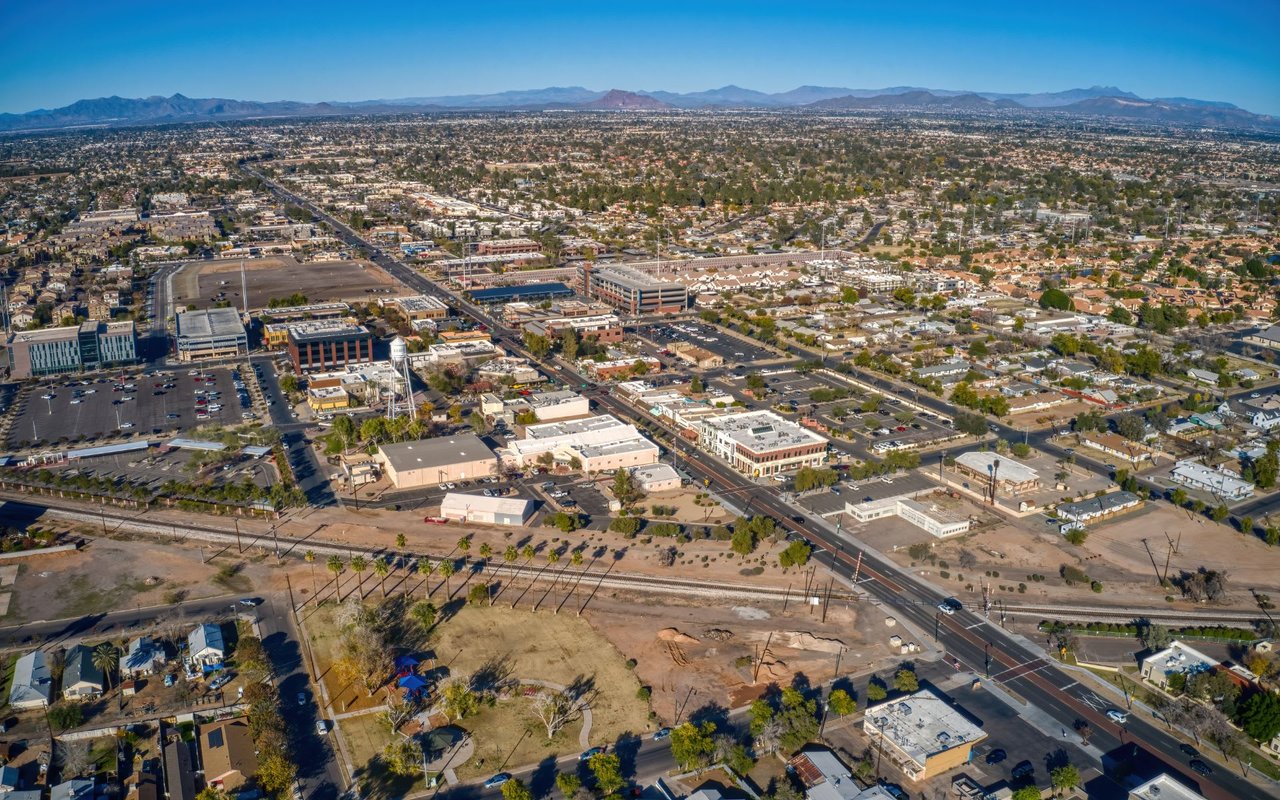
Gilbert was a farming town. Not long ago — within living memory, not just history books. And that agricultural identity left something behind in the culture of the community that no amount of suburban development has been able to fully overwrite. Gilbert feels different from other East Valley cities because it grew from something real, and it has been intentional about what it has allowed itself to become.
Gilbert's transformation from an agricultural town to a thriving suburban community underscores its appeal. The town boasts a blend of rich history, modern amenities, and a strong sense of community, making it an attractive locale for various demographics. That combination — history, amenities, community — is harder to manufacture than most master-planned communities realize, and Gilbert has it authentically.
The Schools
The school story in Gilbert is not marketing copy — it is the primary reason most families move here. Chicago, Seattle, and Los Angeles top inbound search origins, with California sending 34,000 residents annually to Maricopa County alone. These relocating families are drawn by Gilbert's combination of safety and educational excellence.
The Gilbert Public Schools District and Higley Unified School District both consistently earn "A" ratings from the Arizona Department of Education. Dr. Camille Casteel High School ranks 35th in Arizona with a 96% graduation rate and 40% Advanced Placement participation. For families leaving California or Illinois school districts that have underperformed for years, Gilbert's public school quality feels transformative — because it genuinely is.
The Neighborhoods
Gilbert's neighborhood variety is one of its underappreciated strengths. It is not a single-note suburb.
Agritopia is Gilbert's celebrity neighborhood — a true "agrihood" built around a working farm and a walkable, community-focused layout. People move here because it feels like a small town inside a booming suburb. The working farm produces food for the on-site restaurant, Joe's Farm Grill — one of the best casual dining experiences in the entire East Valley. Agritopia's 6.3% annual appreciation leads all Gilbert neighborhoods, driven by its unique farm-to-table community concept.
Seville Golf & Country Club delivers Gilbert's most comprehensive country club lifestyle — a 30,000-square-foot Tuscan clubhouse, indoor golf simulators, four heated pools including a waterslide splash waterpark, and a Gary Panks-designed championship course that hosted the LPGA Ford Championship.
Val Vista Lakes offers waterfront energy in the middle of the desert — private lakes, boating, and resort-style amenities that make it the community people drive through and immediately ask their agent about. Power Ranch earned national recognition from the National Association of Home Builders as one of the Five Best Master Planned Communities in the Nation — with 26 miles of trails, five pools, two clubhouses, and 25 pocket parks in a neighborhood of 7,400-plus homes.
Morrison Ranch brings something genuinely unusual to Gilbert's suburban landscape — tree-lined streets, mature trees, and a community vibe that makes people say "Okay, this is cute." In a city where most neighborhoods were built on bare desert soil, the shade and maturity of Morrison Ranch's landscaping is a legitimate quality-of-life differentiator.
The Market
The Gilbert real estate market in May 2026 has transitioned into a balanced state with a median list price of $649,999. With inventory up 14% month-over-month, buyers now have significantly more leverage, with homes transacting at approximately 97.8% of asking price. This is one of the best buyer environments Gilbert has offered in several years — meaningful selection, real room to negotiate, and a market where preparation and knowledge are rewarded rather than irrelevant.
The Value Proposition
A $500,000 budget purchases a four-bedroom, 2,100 square-foot Gilbert home with a yard — compared to a 900 square-foot Los Angeles condo. Arizona's 2.5% flat income tax versus California's progressive rates adds thousands in annual savings. Remote workers maintain coastal salaries at desert costs.
That math has been doing real work in Gilbert's growth. When buyers from expensive coastal markets run the full financial picture — housing cost, tax burden, school quality, commute time — Gilbert tends to win decisively. And once families arrive, they tend to stay. The community events calendar, the safety statistics, and the school results have a way of converting skeptics into advocates.
271,118 people live in Gilbert, where the median age is 35.7 and the average individual income is $49,825. Data provided by the U.S. Census Bureau.
Total Population
Median Age
Population Density Population Density This is the number of people per square mile in a neighborhood.
Average individual Income
There's plenty to do around Gilbert, including shopping, dining, nightlife, parks, and more. Data provided by Walk Score and Yelp.
Explore popular things to do in the area, including Blue Owl Catering, Fun and Sun Rentals, and CrossFit FH.
| Name | Category | Distance | Reviews |
Ratings by
Yelp
|
|---|---|---|---|---|
| Dining | 2.4 miles | 5 reviews | 5/5 stars | |
| Active | 4.16 miles | 5 reviews | 5/5 stars | |
| Active | 4.59 miles | 5 reviews | 5/5 stars | |
| Active | 4.39 miles | 28 reviews | 5/5 stars | |
| Active | 4.85 miles | 6 reviews | 5/5 stars | |
| Beauty | 0.96 miles | 24 reviews | 5/5 stars | |
| Beauty | 0.44 miles | 7 reviews | 5/5 stars | |
| Beauty | 3.93 miles | 6 reviews | 5/5 stars | |
|
|
||||
|
|
||||
|
|
||||
|
|
||||
|
|
||||
|
|
Gilbert has 91,712 households, with an average household size of 2.95. Data provided by the U.S. Census Bureau. Here’s what the people living in Gilbert do for work — and how long it takes them to get there. Data provided by the U.S. Census Bureau. 271,118 people call Gilbert home. The population density is 3,953 and the largest age group is Data provided by the U.S. Census Bureau.
Total Population
Population Density Population Density This is the number of people per square mile in a neighborhood.
Median Age
Men vs Women
Population by Age Group
0-9 Years
10-17 Years
18-24 Years
25-64 Years
65-74 Years
75+ Years
Education Level
Total Households
Average Household Size
Average individual Income
Households with Children
With Children:
Without Children:
Marital Status
Blue vs White Collar Workers
Blue Collar:
White Collar: